
The Best Self-Soothing Techniques for Kids
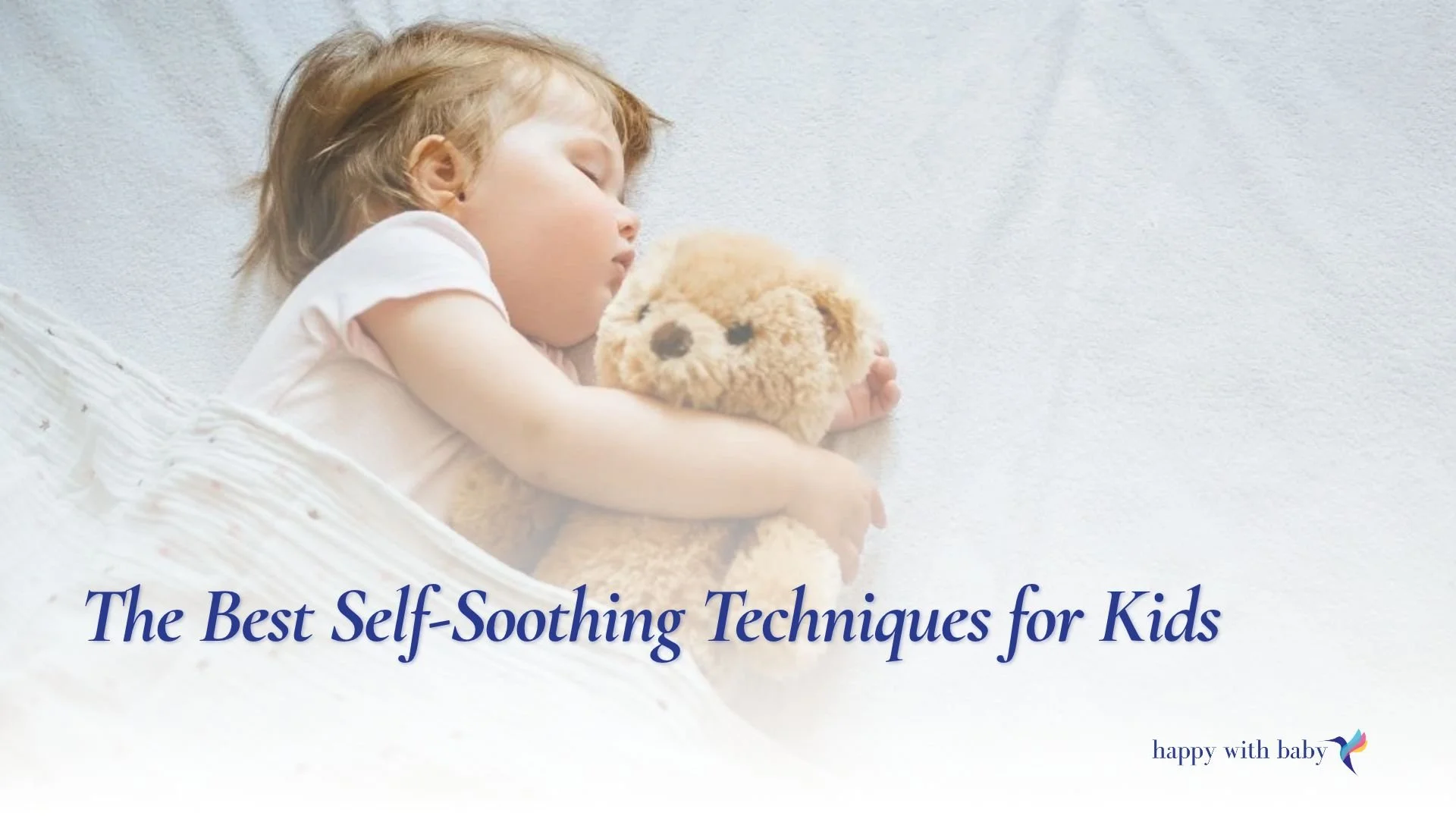
A toddler sleeping under a thin blanket on a light blue bed. The baby grips a small brown teddy bear in their arms.
Big emotions can arrive fast for kids. A lost toy, a hard goodbye at school, a loud room, or a change in plans can turn an ordinary moment into tears or frustration. Children don't arrive with a built-in set of tools for those moments, so they rely on adults to show them ways to find calm again. Especially for younger children, learning to manage big emotions begins with co-regulation. Having a calm, supportive adult nearby helps children feel safe and supported as they gradually develop the ability to manage their emotions more independently.
The best self-soothing techniques for kids give children practical options they can return to when emotions feel too large. No single method suits every child, and the goal isn't to erase sadness, anger, fear, or frustration. Try a few of the ideas below at home and notice the methods your child seems to prefer.
What Does Self-Soothing Mean for Kids?
Self-soothing refers to actions that help a child settle after stress, frustration, fear, excitement, or another intense emotion. Adults have their own versions of this. Someone might take a walk after a hard day, listen to a favorite album, sit somewhere quiet, or call a friend.
Kids need their own versions, too. A young child may reach for a stuffed animal, ask for a hug, or retreat to a familiar corner. An older child may use slow breaths, music, art, or quiet time.
These habits take time to develop, and parents may find themselves wondering how everyday routines and experiences influence emotional regulation. That includes questions about whether screen time increases self-soothing behaviors in kids and how children learn to manage their emotions with and without outside distractions. At first, a parent may need to stay nearby and offer guidance. With repetition and age, a child can build a broader set of options and start to recognize what helps in different situations.
Start With Calm Breaths
Deep breaths are easy to practice almost anywhere. However, telling an upset child to "take a deep breath" can feel abstract, especially for younger kids. A playful image gives the exercise a little more shape.
Ask your child to imagine a flower in one hand and a candle in the other. They can breathe in through their nose as if they want to smell the flower, then breathe out through their mouth as if they want to blow out the candle. A few slow rounds can turn this into a familiar ritual. Practice during calm parts of the day rather than reserve the exercise for stressful moments. That familiarity can help the routine feel more natural when emotions rise.
Create a Cozy Calm-Down Space
Self-soothing techniques for kids work best in a calm, welcoming environment. A calm-down space doesn't need to look elaborate or take over an entire room. A corner with a soft pillow, a favorite book, a blanket, and a few comforting objects can work well. The purpose is to give your child a pleasant place where stimulation drops and emotions have room to settle.
This area shouldn't feel like a punishment spot. Let your child have some say in what goes there, from a beloved stuffed animal to a small basket of books. A sense of ownership can help the space feel personal rather than imposed.
Some children may want a parent close by. Others may prefer a little space. Respect for that preference can help the area become a dependable part of family life.
Use the Five Senses
Strong emotions can pull a child's attention toward whatever caused the distress. Sensory activities offer another place for that attention to land. A soft blanket, a cool drink of water, a familiar scent, gentle music, or a smooth object can provide comfort. Parents can also invite kids to notice what they see, hear, smell, taste, and feel around them. Keep the exercise relaxed rather than treat it like a test.
Sensory preferences vary from child to child. One kid may adore a fuzzy blanket, but another may find the texture irritating. Pay attention to your child's reactions and let those responses guide the options you keep nearby.
Add Movement to the Toolbox
Not every child wants to sit still after a burst of emotion. Some kids feel better after they have a chance to use their bodies. A short walk, a few stretches, jumps in place, or a dance to a favorite song can offer an outlet for pent-up energy. Even a trip from one room to another can provide a useful shift in environment. The activity doesn't need to become a full exercise session.
Movement can also fit naturally into family routines. A walk around the block after a tense afternoon gives everyone a change of scenery without much fuss. For some kids, that physical reset feels more approachable than a formal calm-down exercise.
Offer Comfort Objects
There's a reason a favorite stuffed bear can become part of nearly every car ride, bedtime, and family trip. Familiar objects can carry a strong sense of comfort for children. A stuffed animal, blanket, family photo, small pillow, or another safe object may help a child feel settled. Older kids may gravitate toward a favorite hoodie or a piece of music instead.
The specific object matters less than the comfort your child associates with it. Parents don't need to rush kids away from a beloved comfort item. As children mature, their preferred sources of comfort may change on their own.
Help Kids Put Feelings Into Words
A child can have a hard time with an emotion before they have the vocabulary to describe it. Words can give that experience a clearer shape. Parents can offer calm observations such as, "You seem frustrated because the tower fell," or, "You look sad that Grandma had to leave." The goal isn't to tell children what they feel as an absolute fact.
Instead, the words give them language they can accept, reject, or refine. As kids gain more emotional vocabulary, they may become better able to tell parents what happened and what they need next. That can also help families move from a tense moment toward a calmer conversation.
Self-Soothing Techniques Grow With Your Kids
A preschooler's favorite calm-down strategy may look very different a few years later. The stuffed animal may give way to music, a sketchbook, a walk outside, or a few quiet minutes alone. That's part of the process.
Give your child several strategies rather than expect one technique to solve every emotional moment. Some days call for movement. Others call for a hug, quiet space, creative expression, or a conversation after emotions settle.
Most of all, leave room for your child to discover what feels natural. Self-soothing is a skill set that develops over time, not a performance kids have to get right. Start with one or two ideas from this list, practice them together during calm moments, and give your child space to build a personal toolbox that can evolve alongside them.
Catherine O’Brien is a licensed marriage and family therapist, founder of Happy With Baby, and author of Happy With Baby: Essential Relationship Advice When Partners Become Parents. With more than 20 years of experience, she helps parents and couples navigate the challenges of raising children, manage stress, and strengthen their relationships. Learn more about Catherine and her work at Happy With Baby | Book An Appointment